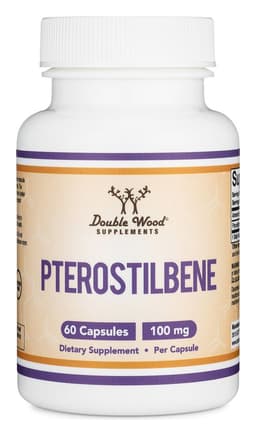
TL;DR — Pterostilbene is a methylated resveratrol analog with roughly 4× human oral bioavailabilityHow much of a compound actually reaches your bloodstream and tissues after you take it. Full glossary →. Tier B: Kapetanovic 2011 confirmed safety and superior PK; longevity outcomes rely on SIRT1/AMPK mechanism shared with resveratrol. 50–150 mg PM with NMN AM; compare at /library/compare/resveratrol-vs-pterostilbene.
What pterostilbene does (and why it matters)
Trans-resveratrol's limitation is rapid glucuronidation. Pterostilbene's dimethyl structure slows clearance, achieving higher plasma exposure at lower doses — the same SIRT1 activation thesis with better pharmacokinetics.
Primary hallmarks targeted: Mitochondrial dysfunction · Epigenetic alterations · Chronic inflammation
PMID 21749330 — Pharmacokinetics and safety of pterostilbene in humans (Kapetanovic 2011). See also TNiC compare table: /library/compare/resveratrol-vs-pterostilbene.
Mechanism
| Pathway | Mechanism | Hallmark link |
|---|---|---|
| SIRT1 activation | Allosteric sirtuin stimulation (NAD+-dependent) | Epigenetic · Mito |
| AMPKAn energy-sensing enzyme activated when ATP is low — it promotes fat burning, mitochondrial biogenesis, and autophagy. Full glossary → phosphorylation | Nutrient-sensing shift toward repair | AutophagyThe cellular self-cleaning process that breaks down and recycles damaged proteins, organelles, and pathogens. Full glossary → |
| NF-κB modulation | Anti-inflammatory transcription | Inflammation |
When pterostilbene beats resveratrol
Choose pterostilbene when:
- You want SIRT1 signaling with fewer capsules / higher PK
- PM dosing with AM NMN is already in your stack
- GI tolerance to high-dose resveratrol is poor
Compare first: /library/compare/resveratrol-vs-pterostilbene
Evidence summary
| Study | Design | Key outcomes | Tier |
|---|---|---|---|
| Kapetanovic 2011 | Human PK/safety | 350 mg/day tolerated; higher exposure vs resveratrol | B |
| Preclinical | Animal | SIRT1/metabolic markers | B/C |
← Swipe for more columns →
Consensus: Bioavailability advantage is human-confirmed; longevity outcomes remain mechanistic extrapolation — same Tier B posture as resveratrol.
Where pterostilbene disappoints
- Better PK is not proven benefit. The human data are essentially pharmacokinetics and safety — higher blood levels, yes, but no efficacy or longevity outcome trial. It inherits resveratrol's SIRT1 thesis, which largely failed to translate. - A human trial raised LDL. Standalone pterostilbene at higher doses increased LDL cholesterol (and blood pressure) in a controlled trial — the opposite of a cardiovascular benefit, and a real reason to watch lipids. - It's redundant with resveratrol. Same target, same unproven outcome story — running both just doubles the stilbene load without doubling evidence.
Dosing protocol
- Dose: 50–150 mg pterostilbene
- Timing: PM with fat-containing meal (pairs with AM NMN)
- Avoid: Duplicating both resveratrol and pterostilbene without reason
- Retest: NAD+A molecule every cell needs for energy production, DNA repair, and activating longevity genes (sirtuins). Full glossary → proxy markers at week 4 if on NMN co-stack
Pterostilbene or resveratrol?
Already running AM NMN and want SIRT1 signaling with fewer capsules?
Pterostilbene 50–150 mg PM — compare the two first
node | Poor GI tolerance to high-dose resveratrol?
Trial pterostilbene at 50 mg PM and titrate
Resveratrol is the better-studied default — no need to switch
On anticoagulants/antiplatelets or pre-surgery → physician clearance (stilbene platelet effects)
Educational decision aid — a way to organize the evidence, not a prescription. Doses and timing shown are those used in studies; confirm anything you act on with a clinician or pharmacist.
Monitoring
Pterostilbene shares resveratrol's SIRT1 thesis, so track the same NAD+-axis and lipid/inflammatory markers — especially if it sits in an NMN stack.
| Biomarker | Target | Frequency | Action if off-target |
|---|---|---|---|
| NAD+ index (if on NMN) | 80–100 | Baseline, 4 wk | Flat → confirm NMN dose/timing, not pterostilbene |
| LDL cholesterol | Within your target | Baseline, 12 wk | Watch trend — pterostilbene has shown LDL effects in some trials |
| hs-CRP | <1.0 mg/L | Baseline, 12 wk | Persistently high → review inflammation drivers |
| Fasting glucose | <100 mg/dL | 3 months | Rising → audit diet and stack |
← Swipe for more columns →
Safety, red flags, and contraindications
- Human-confirmed PK/safety: Kapetanovic 2011 established tolerability up to 350 mg/day.
- Lipid signal: Some human data shows LDL changes at higher doses — monitor a lipid panel if you run it long term.
- Stilbene class: Mild platelet effects are plausible; treat like resveratrol around surgery and anticoagulation.
Do not self-start without clearance
- On anticoagulants or antiplatelet therapy — stilbene platelet effects; physician clearance required
- Scheduled surgery — pause stilbenes per your surgeon's perioperative guidance
- Pregnancy or breastfeeding — insufficient supplemental-dose safety data
- On statins or lipid therapy — monitor LDL and coordinate with your prescriber
What would change this grade. Pterostilbene is B on PK/safety plus mechanism. An efficacy outcome trial (not another PK study) would move it; the LDL signal caps enthusiasm and would pull it down if confirmed at common doses. Superior bioavailability alone won't upgrade it.
Who should skip pterostilbene
- Anyone with lipid concerns or on statins — the human LDL-raising signal applies directly; monitor and coordinate. - Anticoagulant/antiplatelet users or anyone pre-surgery — stilbene platelet effects. - Anyone already running resveratrol — same target; don't double the stilbene load.
Synergies and antagonists
Pairs well with:
| Partner | Rationale | Guide |
|---|---|---|
| NMN | NMN fuels the NAD+ pool that pterostilbene-activated SIRT1 consumes | NMN module |
| Trans-resveratrol | Same target — choose one, do not double the stilbene load | Resveratrol vs pterostilbene |
| Ca-AKG | Complementary epigenetic + TCA support | NAD+ Mito Stack |
Works against / redundant with:
| Antagonist | Conflict | What to do |
|---|---|---|
| Trans-resveratrol | Same SIRT1 target — redundant stilbene coverage | Pick one, not both |
| Statins / lipid therapy | Pterostilbene's LDL-raising signal works against lipid goals | Monitor a lipid panel; coordinate with your prescriber |
| Anticoagulants / antiplatelets | Additive bleeding risk from stilbene platelet effects | Physician clearance; pause before surgery |
Personal results template
My pterostilbene results log
| Date | Week | Dose | NAD+ | LDL | hs-CRP | NMN AM? | Notes |
|---|---|---|---|---|---|---|---|
| YYYY-MM-DD | 0 | — | — | — | — | Yes | Baseline |
| YYYY-MM-DD | 4 | 50–100 mg | — | — | — | Yes | Early NAD+ check |
| YYYY-MM-DD | 12 | 50–150 mg | — | — | — | Yes | Primary endpoint |
← Swipe for more columns →
Response criteria (personal, not clinical): - Meaningful: NAD+ index holding ≥80 on NMN co-stack with stable lipids and CRP - Plateau: No subjective or marker change → the NAD+ precursor, not the SIRT1 activator, is your limiting factor - Adverse: Rising LDL or bruising/bleeding → pause and review with your physician
Resveratrol vs pterostilbene
Decide which stilbene earns the PM slot before you buy.
Open compare tableReferences
Links open PubMed. TNiC does not sell supplements; citations support education, not medical advice.