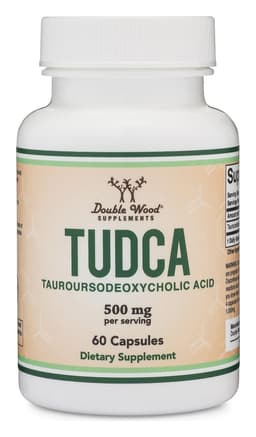
TL;DR — TUDCA is a taurine-conjugated bile acid that acts as a chemical chaperone, stabilizing protein folding and reducing ER stress. Tier B: strong preclinical proteostasis and mitochondrial data; human hepatoprotection studies exist but no longevity RCT. Start 250–500 mg/day, titrate to 500–1000 mg over 8–12 weeks; retest ALT/AST at week 8.
What TUDCA does (and why it matters)
Aging cells accumulate misfolded proteins. The unfolded protein response (UPR) tries to correct folding, but chronic ER stress triggers CHOP-mediated apoptosis and inflammatory signaling. Proteostasis fails — aggregates rise, mitochondria lose membrane integrity, autophagyThe cellular self-cleaning process that breaks down and recycles damaged proteins, organelles, and pathogens. Full glossary → stalls on damage control instead of productive clearance.
TUDCA stabilizes folding in the ER lumen and prevents Bax translocation to mitochondria — supporting proteostasis and mitochondrial hallmarks from a single molecule.
Primary hallmarks targeted: Loss of proteostasis · Mitochondrial dysfunction · Disabled macroautophagy
Strong preclinical data for ER stress reduction, apoptosis inhibition, and mitochondrial protection. Human data strongest in cholestatic liver disease; longevity-specific human RCTs do not exist.
Mechanism — chaperone before clearance
| Pathway | TUDCA action | Hallmark |
|---|---|---|
| Protein folding | Chemical chaperone in ER lumen | Proteostasis |
| UPR | ATF6/IRE1 modulation; lowers CHOP | Proteostasis |
| Mitochondria | Anti-apoptotic membrane stabilization | Mitochondrial dysfunction |
| Autophagy | Reduced ER burden → improved flux | Disabled autophagy |
TUDCA does not replace GlyNAC (cysteine redox) or sulforaphane (proteasome gene induction) — it handles tertiary misfolding stress while partners address orthogonal proteostasis layers.
When TUDCA is worth your money
TUDCA earns a trial slot when two or more apply:
- Subjective brain fog or slow recovery with normal sleep
- ALT/AST borderline or history of hepatic stress (physician cleared)
- Proteostasis hallmark is primary on your dashboard
- You already run GlyNAC 8+ weeks and want ER-layer depth
Skip or defer if gallstone disease without clearance, pregnancy, or you have not established GlyNAC + lifestyle foundation.
Evidence summary
| Study type | Model | Finding | Tier |
|---|---|---|---|
| Preclinical | Mouse neurodegeneration | Reduced ER stress, improved motor function | C |
| Preclinical | Cell culture | Mitochondrial apoptosis prevention | C |
| Human | Cholestatic liver disease | Hepatoprotection, reduced liver enzymes | B |
| Human longevity | — | No dedicated RCT | — |
← Swipe for more columns →
Consensus: Tier B — compelling mechanism and emerging human safety in hepatic contexts. Proteostasis adjunct, not stack foundation.
Where TUDCA disappoints
- The human evidence is hepatology, not longevity. TUDCA/UDCA's real human data are in cholestatic and liver disease. The proteostasis and anti-aging framing is extrapolated from preclinical work — there is no human aging trial. - The "brain fog / recovery" benefit is anecdotal. It's a plausible mechanism and a common subjective report, but no controlled human data support a cognitive effect. Judge it against your own baseline, skeptically. - It's a second-line layer. It doesn't replace glutathione (GlyNAC) or proteasome induction (sulforaphane) — on its own the measurable payoff for a healthy person is unclear.
Should you run a TUDCA trial?
GlyNAC 8+ weeks + lifestyle foundation?
node | Brain fog / recovery ≤6 OR ALT borderline with physician OK?
8–12 week trial 250→500–1000 mg — ALT/AST at week 8
Maintain GlyNAC + sulforaphane 8 more weeks
Start GlyNAC first — TUDCA is second-line proteostasis
Gallstones, pregnancy, active bile acid therapy → physician clearance required
Educational decision aid — a way to organize the evidence, not a prescription. Doses and timing shown are those used in studies; confirm anything you act on with a clinician or pharmacist.
Dosing protocol
| Parameter | Recommendation | Notes |
|---|---|---|
| Dose | 250–1500 mg/day | Start 250–500 mg; titrate by tolerance |
| Timing | AM or split AM/PM | Take with food for GI comfort |
| Duration | 8–12 weeks trial | Reassess via symptoms + liver panel |
| Form | Capsule (TUDCA powder) | Verify purity / third-party testing |
Stack placement: Proteostasis layer — pairs with GlyNAC (GSH for cysteine residues) and sulforaphane (proteasome upregulation via NRF2).
Week-one compliance checklist
- [ ] Baseline ALT, AST, GGT logged in Labs hub
- [ ] Start 250 mg with breakfast — note GI response
- [ ] Continue GlyNAC AM without changing dose mid-trial
- [ ] Calendar week 8 liver panel
- [ ] Track brain fog / recovery 1–10 daily
Build proteostasis stack
Layer TUDCA alongside GlyNAC — synergyWhen two compounds together produce greater effect than either alone. Full glossary → and contraindication checks update live.
Open Stack ArchitectMonitoring
| Biomarker | Target | Frequency | Action if off-target |
|---|---|---|---|
| ALT / AST | Within lab reference | Baseline, 8 wk | Stop if >2× baseline rise |
| GGT | Trending stable/down | 8–12 wk | Physician review if rising |
| Bilirubin | Normal range | Baseline | Especially if hepatic history |
| Subjective GI | No persistent distress | Ongoing | Loose stool = reduce dose |
| Brain fog (1–10) | ↑2 points by week 12 | Weekly | Flat → reassess stack layer |
← Swipe for more columns →
ALT/AST
Baseline
Brain fog
6–7/10
Recovery days
3–4
GSH (if on GlyNAC)
Improving
ALT/AST
Stable — no >2× rise
Brain fog
4–5/10 (lower is better)
Recovery days
2–3
GSH (if on GlyNAC)
Continued ↑
Safety, red flags, and contraindications
- GI effects: Loose stools at higher doses — reduce dose or take with food
- Gallstones: UDCA/TUDCA class can affect bile composition — consult if known gallbladder disease
- Pregnancy: Avoid
- Not in TNiC stack toggles: Library-only reference; evaluate with physician if on other bile acid therapies
Stop and consult physician
- ALT or AST >2× baseline during trial
- Persistent diarrhea after dose reduction
- Right upper quadrant pain — rule out biliary pathology
- Undisclosed "liver blend" without TUDCA mg — demand identity and COA
What would change this grade. TUDCA is B carried by mechanism plus hepatology safety data — with no human longevity or proteostasis-outcome trial behind it. It would rise with a controlled human trial in a non-liver, aging-relevant endpoint; until then the anti-aging use is inference.
Who should skip TUDCA
- Known gallbladder disease / gallstones or active bile-acid therapy — the bile-acid class can alter bile composition; physician clearance required. - Pregnancy — avoid. - Anyone expecting a cognitive or longevity effect — the human evidence is hepatic; set expectations there, and build the GlyNAC/lifestyle foundation first.
Synergies and antagonists
Pairs well with:
| Partner | Rationale | Guide |
|---|---|---|
| GlyNAC | GSH protects cysteine residues; TUDCA handles misfolded tertiary structure | NRF2 Triad |
| Sulforaphane | NRF2A protein that turns on 200+ antioxidant and detox genes when activated. Full glossary → upregulates proteasome subunits — complementary clearance | Sulforaphane |
| NMN | Mitochondrial support from complementary angle (NAD+ vs membrane stability) | NAD+ Mito Stack |
Works against / redundant with:
| Antagonist | Conflict | What to do |
|---|---|---|
| Other bile-acid therapies (e.g. prescription UDCA) | Overlapping bile-acid pool; combining is a physician-managed decision | Don't self-combine with prescribed bile-acid drugs |
| Bile-acid sequestrants (cholestyramine) and some antacids | Can bind bile acids in the gut and reduce absorption | Separate dosing by several hours |
| — | No other well-characterized supplement antagonists | Otherwise co-stacks within the proteostasis layer |
Personal results template
My TUDCA results log
| Date | Week | Dose | ALT | AST | GI tolerance (1–10) | Energy (1–10) | Brain fog (1–10) | Notes |
|---|---|---|---|---|---|---|---|---|
| YYYY-MM-DD | 0 | — mg | — | — | — | — | — | Baseline labs |
| YYYY-MM-DD | 4 | 500 mg | — | — | — | — | — | Titration |
| YYYY-MM-DD | 8 | 500–1000 mg | — | — | — | — | — | Mid-point |
| YYYY-MM-DD | 12 | — mg | — | — | — | — | — | Continue or stop |
← Swipe for more columns →
Decision rules: - Continue if liver enzymes stable + subjective proteostasis benefit (clarity, recovery) - Stop if ALT/AST rise >2× baseline or persistent GI intolerance
Pair with NRF2 triad
TUDCA complements the GlyNAC + sulforaphane proteostasis layer.
NRF2 Defense Triad